

|
DOWNLOAD
ARTICLE
TEMPLATE
|
Journal Identity
Delta-Phi: Journal of Mathematics Education, Vol. 2 No. 2 (2024), published by CV Bimbingan Belajar Assyfa, contains 5 manuscripts written by 16 authors from 4 countries (Indonesia, Nepal, Hong Kong, and China) and involves 10 institutions, including PGRI Wiranegara University, SDI Baitul Makmur Malang, SMA Wachid Hasyim 2 Sidoarjo, Universitas Terbuka, Maa'rif University Lampung (UMALA), Ma'arif University Metro Lampung, SMA Negeri 1 Pasuruan, Nahdlatul Ulama University Pasuruan, Jitpur Secondary School Nepal, Atma Jaya Catholic University of Indonesia, Yayasan Assyfa Learning Centre, and The Chinese University of Hong Kong. This edition features themes of digital media innovation, peer influence, popular music integration, inclusive constructivist strategies, and analysis of mathematical thinking patterns in humor. This edition's trends show the strengthening of cross-cultural research, technology, and creativity, opening up opportunities for further research on the digitalization of learning, inclusion, and the development of learning models based on global and local contexts.
Delta-Phi: Journal of Mathematics Education, Vol. 2 No. 1 (2024), published by CV Bimbingan Belajar Assyfa, contains 5 manuscripts written by 16 authors from 2 countries (Indonesia and Pakistan) and involving 7 institutions. This edition features themes such as exploration of mathematical concepts based on culture and religion, ethnomathematics, integration of TPACK in digital assessment, and innovation of interactive media based on learning styles. The trend of this edition shows the strengthening of research on the integration of technology, local wisdom, and innovative pedagogical approaches, opening up opportunities for further research in the fields of digitalization of learning, ethnomathematics, and the development of adaptive learning models according to the needs of the 21st century.

Delta-Phi: Jurnal Pendidikan Matematika, Vol. 1 No. 3 (2023), diterbitkan oleh CV Bimbingan Belajar Assyfa, memuat 10 artikel, termasuk "MICROTEACHING: Analisis Kesiapan Mahasiswa Calon Guru Matematika dalam Mengajar Materi Fungsi," "Media Pembelajaran Mobile untuk Minat Matematika SMP: Bagaimana Pengembangannya? Apakah Efektif?" "Implementasi Etnomatematika Berbasis Alat Kesenian Rebana dalam Pembelajaran Bangun Ruang," "Pengaruh Aplikasi TikTok terhadap Penalaran Matematika Siswa," "Kecemasan Matematika dan Efikasi Diri terhadap Kemampuan Pemahaman Relasional Siswa," dan "Analisis Kebutuhan Media Pembelajaran Pizzaluv-Math agar Siswa Dapat Mudah Mempelajari Batas Fungsi Trigonometri."
Delta-Phi: Jurnal Pendidikan Matematika, Vol. 1 No. 2 (2023), published by CV Bimbingan Belajar Assyfa, presents 10 articles, including Indonesia, India, and Brazil. The articles cover diverse topics, such as card-based learning media to boost mathematical literacy, the "DINO Vs. DINI” educational game for cognitive development, and the creation of comic-based educational media focusing on local wisdom in Medan. Additionally, the journal analyzes students' math learning difficulties through cognitive styles, explores creative thinking abilities from a gender perspective, and examines the impact of teaching methods that incorporate Islamic values on student outcomes. It also investigates challenges with the Pythagorean theorem in Islamic boarding schools and discusses collaboration between right and left brain students using mind mapping for statistics.
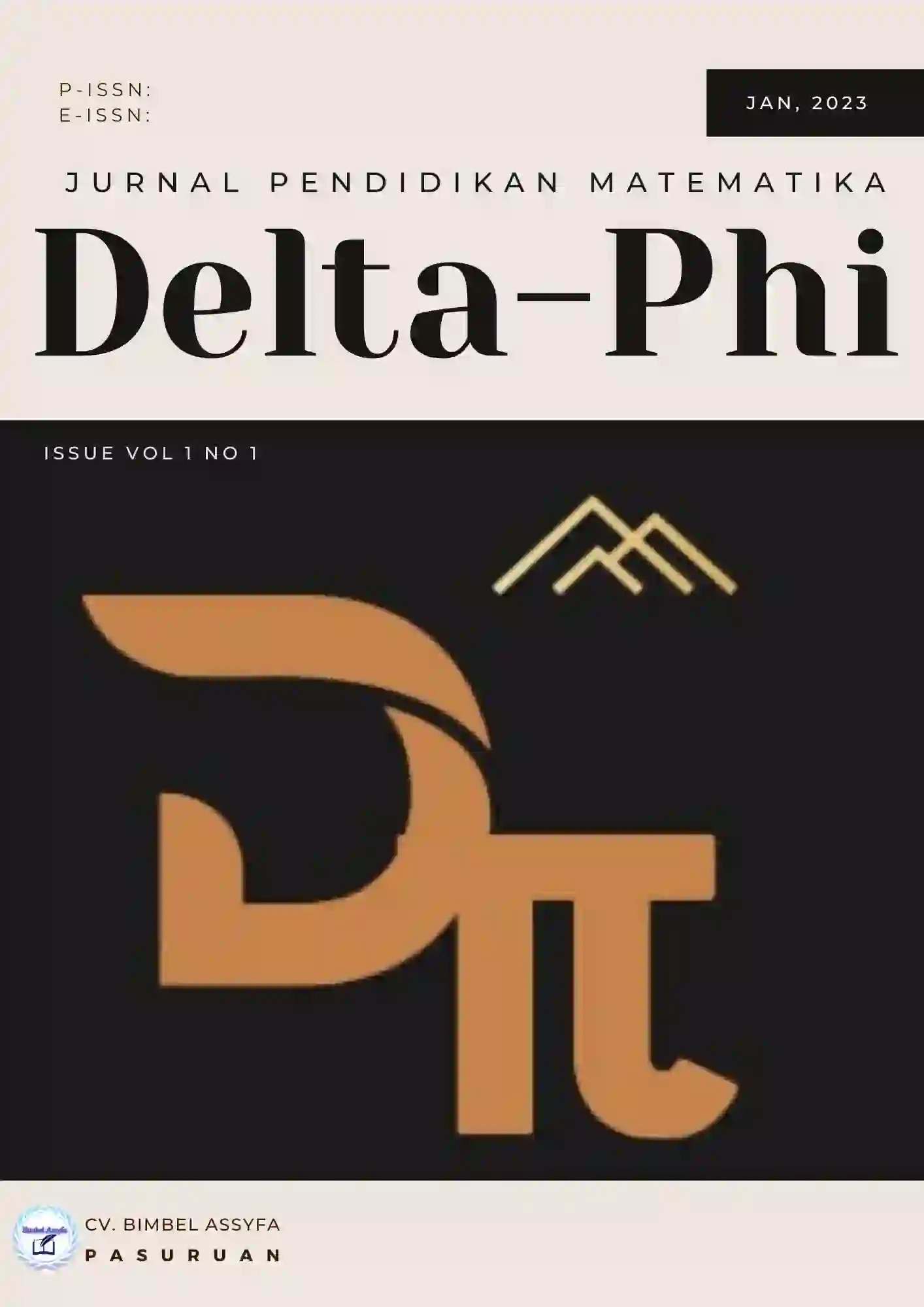
Delta-Phi: Jurnal Pendidikan Matematika, Vol. 1 No. 1 (2023), published by CV Bimbingan Belajar Assyfa, features 15 articles by 56 authors from 32 institutions across 8 countries, including Indonesia, India, and Brazil. It focuses on innovative methods in mathematics education, addressing issues like gender differences, Islamic values integration, and digital technology use. The journal emphasizes an interdisciplinary approach linking mathematics with career readiness and aims to enhance student learning outcomes in Indonesia. It serves as a valuable resource for educators and researchers, promoting knowledge sharing and curriculum development for 21st-century challenges.